Fade Haircut Types: Every Fade Explained and How to Ask
Warning: Permanently added '152.53.38.97' (ED25519) to the list of known hosts.
By the 10Trim Editorial Team · Last updated: July 2026
Almost every men's haircut in a barbershop today is built on a fade. The confusing part is the vocabulary: low, mid, high, taper, skin, bald, drop, burst, temp, plus numbers like “a 2 into a 1.” It sounds like a lot, but every one of those names is describing just two things — where the blend starts on your head, and how short it goes at the bottom. Once you understand those two variables, the whole menu makes sense.
This page is the map. It explains how fade levels work, walks through every fade type worth knowing, decodes the guard numbers, and points you to a full guide for whichever one you land on.
What a Fade Haircut Actually Is
A fade is a gradient. The hair on the sides and back shortens progressively as it moves down the head, blending from your length on top into very short hair, or into bare skin, at the bottom. There is no visible step or line — the whole point is a seamless transition, which is what separates a fade from an old-fashioned short back and sides.
The fade only describes the sides and back, which is why it pairs with virtually any style on top: a crop, a quiff, a pompadour, a comb-over, curls, locs or a simple buzz. Your barber builds it by working up through clipper guard lengths and then erasing the lines between them with the taper lever and a clipper-over-comb motion.
Fade Levels: The One Thing That Separates Low, Mid and High
Fade “levels” refer to the height of the guideline — the point on the side of your head where the blend begins. Everything below that line is faded; everything above keeps your length.
- Low — the line sits just above the ear and follows the natural hairline around the back. Subtle, office-safe, slow to grow out.
- Mid — the line sits at the temple, roughly halfway between the ear and the corner of the forehead. The balanced default.
- High — the line sits at or above the temporal ridge, the corner where the side of your skull turns into the top. Maximum contrast, fastest upkeep.
The height is the single biggest decision here, so if you read one other page in this silo, make it the mid fade guide: it now carries a full low vs mid vs high breakdown showing exactly where each line falls against your own head, what each height does to your proportions, and how often each one needs a touch-up.
The second variable is how short the bottom goes: down to a guard (a taper) or all the way to bare skin (a skin or bald fade). Height and bottom length combine freely, which is where names like “low skin fade” or “high taper fade” come from.
Every Type of Fade Haircut
| Fade type | Where the line starts | Bottom length | Best for | Typical upkeep |
|---|---|---|---|---|
| Low fade | Just above the ear | Guard or skin | Conservative offices, first-time fades | 3–4 weeks |
| Mid fade | At the temple | Guard or skin | The all-purpose default | 2–3 weeks |
| High fade | Temporal ridge and up | Usually skin | Sharp contrast, short tops | 1–2 weeks |
| Taper fade | Any height | Never bare skin | Softest, most classic finish | 3–5 weeks |
| Skin / bald fade | Any height | Bare scalp | The cleanest look, weekly upkeep | ~1 week |
| Drop fade | Arcs down behind the ear | Guard or skin | Curly and textured hair | 2–3 weeks |
| Burst fade | Semicircle around the ear | Guard or skin | Mohawks, mullets, edgier tops | 2–3 weeks |
| Temp fade | Temples and corners only | Line-up, often skin | Waves, curls, locs, beard connects | 1–2 weeks |
Low Fade
The safest place to start. It keeps most of your hair, reads as tidy rather than trendy, and holds its shape for three or four weeks. Our low fade haircut guide covers the variations, and if you want the softest version of it, the low taper fade keeps a whisper of length at the neckline instead of going bare.
Mid Fade
The most requested fade in the shop, and the most versatile: enough contrast to look deliberate, not so much that it dominates your face. It works with practically every top length and hair type. Start with the mid fade haircut guide; if your hair is curly or coily, the shrinkage changes where the line should sit, which is covered in mid fade on curly hair.
High Fade
Bold and disciplined, with the shortest hair carried high up the sides so all the attention lands on the top. It also grows out fastest, so plan on the chair every week or two. See the high fade haircut guide.
Taper Fade
A taper shortens the hair gradually but always leaves length at the bottom; a fade blends to skin. A taper fade splits the difference — a clean tapered hairline with a faded blend above it. It is the most conservative option on this list. Read the taper fade guide, or the full taper vs fade comparison if the terms still blur together.
Skin Fade (Bald Fade)
The highest-contrast version there is, taken to bare scalp with a foil shaver or an open blade. Nothing looks sharper on day one, and nothing shows regrowth faster. Our skin fade haircut guide covers the low, mid and high versions plus how to keep the exposed scalp from breaking out.
Drop Fade
Instead of running level, the guideline arcs downward behind the ear, hugging the curve of the skull. It flatters round heads and textured hair especially well. See the drop fade haircut guide.
Burst Fade
A semicircle that radiates around the ear while the back of the neck stays long or untouched. It is the fade of choice for mohawks, mullets and modern textured cuts — details in the burst fade haircut guide.
Temp Fade
Also called a temple fade or Brooklyn fade, this one fades only the corners at the temples and leaves the rest of the sides alone. It is the standard finish on waves, curls and locs, and it is what most guys mean by a crisp line-up. See the temp fade haircut guide.
Fade with a Part
A hard part is a crisp line shaved along your natural parting, added on top of whichever fade height you choose. It is an add-on rather than a fade type, and it pairs best with a comb-over or side-part.
Short Fades and Kids' Fades
If you want the whole cut short rather than just the sides, our short fade haircut guide covers buzzed and cropped tops over a fade. For children, upkeep and sitting still matter more than contrast — the boys' fade haircut guide covers what actually works. And if you are still deciding between a fade and going shorter overall, see how a fade stacks up against a plain buzz cut below.
Fade Numbers: What a “10 Fade” or “3 2 Fade” Means
Barbers talk in guard numbers, and the numbers are the language you should be using too. Each guard adds roughly an eighth of an inch: a #1 is about 3 mm, a #2 about 6 mm, a #3 about 10 mm, a #4 about 13 mm. A bare blade with no guard is a zero.
- “A 2 into a 1” / “3 2 fade” / “2 3 4 fade” — the sequence of guards from bottom to top. A 2 3 4 fade means the shortest section is a #2, blending through a #3 to a #4 near the guideline.
- “Zero fade” — the bottom is taken to a bare zero blade but not shaved to skin.
- “10 fade” — usually the #10 blade on a professional clipper (about 1.5 mm), not a guard, which is why it sounds unfamiliar coming from a home clipper set.
The numbering is not identical across brands, so if you cut at home it is worth checking our full hair clipper guard size chart in inches and millimeters before you commit.
How to Ask Your Barber for a Fade
Vague instructions are why guys leave the chair disappointed. Say four things, in this order: the height (“a mid fade”), the bottom length (“down to a 1” or “skin at the bottom”), what you want on top (length and style), and the neckline shape (rounded, squared or tapered). Bring a photo — it is still the single most reliable way to get the cut you pictured.
Which Fade Should You Get?
Four practical filters usually settle it. Dress code: conservative workplaces suit a low or taper fade; anything goes elsewhere. Upkeep: high and skin fades want a visit every one to two weeks, low and taper fades stretch to three or four. Hair type: straight hair suits the classic low, mid and high fades, while curly and coily hair looks best with drop, burst and temp fades that follow the curve of the head. Face shape: higher fades add apparent height for rounder faces, lower fades soften longer ones. A fade also works well with a receding hairline, since shorter sides reduce the contrast that draws attention to thin spots. Once the sides are sorted, our roundup of men's haircuts covers what to put on top.
Keeping a Fade Sharp Between Cuts
A fade looks razor-sharp for about a week, then softens. You do not need to re-cut the blend — and you shouldn't try, because re-fading at home is the fastest way to ruin good work. What you can do is line up the neckline weekly, tidy the sideburns and around the ears, and keep the top styled so the whole cut still reads as deliberate. That alone buys an extra week or two between appointments.
For that you need two things: a clipper with a smooth taper lever and evenly spaced guards for any bulk work, and a close-cutting detail trimmer for the outline.
As an Amazon Associate, 10Trim earns from qualifying purchases.


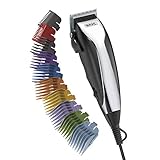


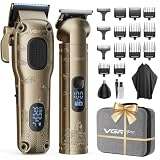
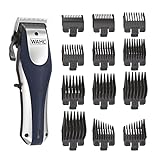


If you want to compare options properly rather than pick from a table, see our tested roundup of the best hair clippers, or step up to the barbershop-grade machines in our professional clippers guide.
Fade vs. a Buzz Cut: Which Needs Less Upkeep?
A fade and a buzz cut solve different problems, and mixing them up is the most common point of confusion in this whole topic. A buzz cut is a length — hair clipped to a single, uniform guard all over, no blending required. A fade is a technique — the transition between lengths on the sides and back — and it can sit under a buzz cut, a pompadour, or almost anything else on top. That distinction is also what decides how much upkeep each one asks for.
A plain buzz cut is the lowest-maintenance haircut there is: one guard, no blending, and it holds its shape for three to five weeks. You can even redo it yourself at home in about ten minutes. A fade, by contrast, blurs at the edges as the shortest hair grows back in, so it needs a barber visit every one to four weeks depending on how high the line sits (see the upkeep column in the table above). If a plain buzz feels too flat but a full fade feels like too much commitment to the chair, a faded buzz cut — a short, even top with the sides faded for contrast — splits the difference: still fast to maintain on top, with a sharper edge than a uniform buzz.
The Bottom Line
Every fade name on the menu is a combination of two decisions: how high the line starts, and how short the bottom goes. Pick your height first — low for subtle, mid for balanced, high for bold — then decide whether you want a guard or bare skin underneath it. Follow the guide for whichever type you landed on above, walk in with a photo and the right guard numbers, and keep the edges clean at home between visits.
Related Info and Products:
- Fade Boys Haircut: Types, Styling, and What to Ask For
- Drop Fade Haircut: Every Variation and How to Ask for One
- Fade Haircut for Black Men: Best Styles and How to Ask
- Mullet Fade Haircut: Modern Variations and How to Ask
- Skin Fade Haircut: Low, Mid and High Variations Explained
- Taper vs Fade Haircut: What's the Difference and Which Suits You?
- Mid Fade Curly Hair: Best Styles, How to Ask, and Upkeep
- Short Fade Haircut: Styles, Variations & How to Get One
- Taper Fade Haircut: Styles, Variations & How to Get It
- Low Fade Haircut: The Complete Style Guide for Men
Last update 2026-09-10. Price and product availability may change.
Leave a Reply